Metaverse Slots: The Visual Revolution

As we stand in the midpoint of 2026, the traditional concept of an online interface has effectively dissolved. I remember a time when players were satisfied with high-definition 2D graphics on a flat glass screen, but that era feels like ancient history now. In my capacity as a lead creative strategist for a premier Metaverse gaming hub, I have overseen the transition from “looking at” games to “inhabiting” them. The evolution of slot machines has been the centerpiece of this revolution, moving away from rectangular boxes and into volumetric, interactive installations that breathe, glow, and respond to the physical presence of your avatar. We are no longer just developers; we are digital architects of light and sound, creating spatial experiences where the boundary between the player and the jackpot is purely mathematical, not visual.
The Architecture of Presence: Moving Beyond the Rectangular Screen
In the early 2020s, “immersion” was a marketing buzzword. In 2026, it is a technical reality driven by the shift from pixel-based rendering to volumetric spatial computing. When you enter our Metaverse floor, you aren’t clicking an icon; you are walking up to a three-dimensional entity.
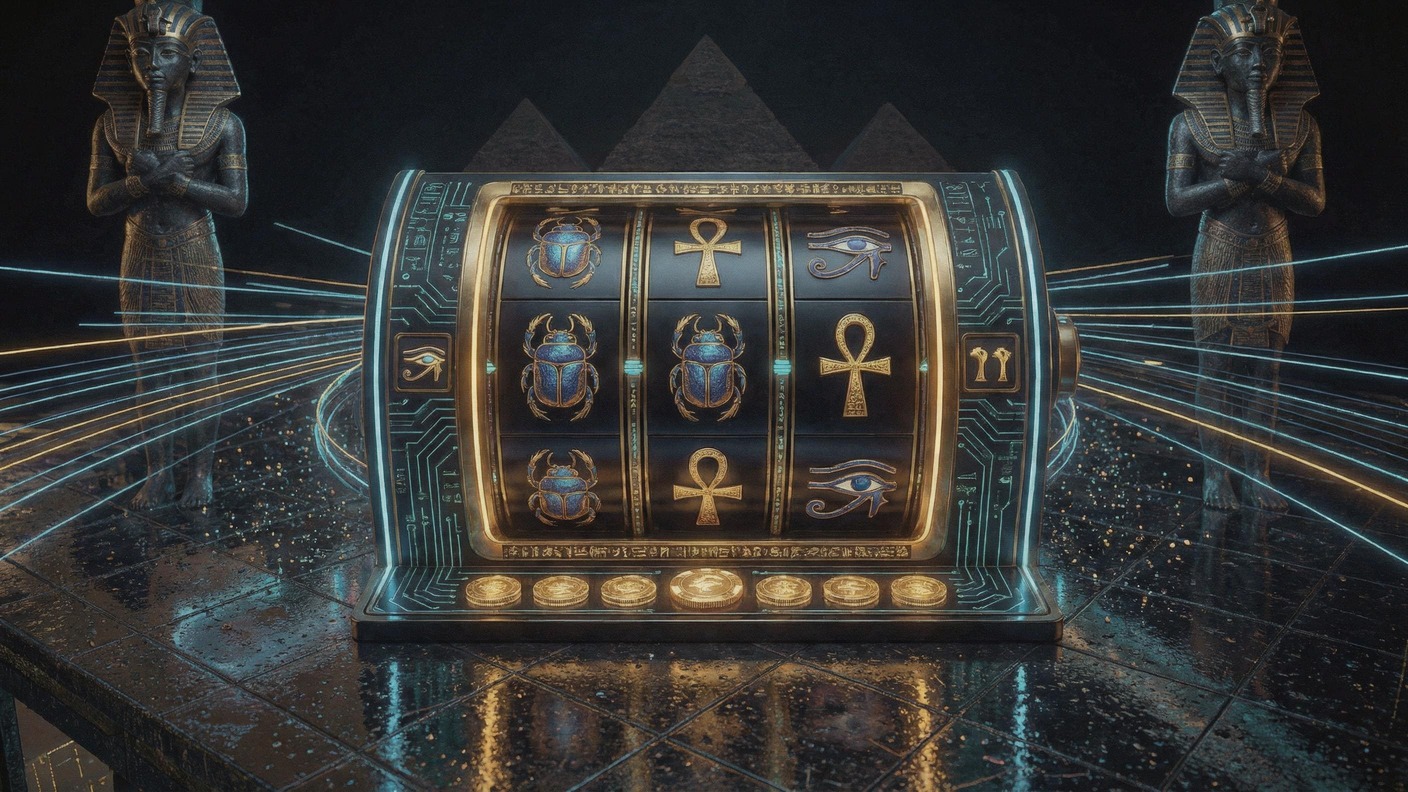
These games now exist in 360-degree space. A “Wild” symbol doesn’t just flicker on a screen; it might manifest as a holographic dragon that circles your avatar, breathing real-time ray-traced fire that illuminates the virtual room around you. This visual weight creates a sense of “Presence,” a psychological state where your brain forgets the headset and accepts the digital environment as your current reality. This transition was only possible because we stopped thinking about slots as games and started treating them as immersive theatrical events.
Neural Rendering: The Secret to Photorealistic 2026 Visuals
The expert-level secret behind our 2026 visual fidelity is Neural Graphics. We no longer rely on traditional rasterization to draw every frame. Instead, we use sophisticated AI models that “imagine” the details of the environment.
Photons, Reflections, and Real-Time Path Tracing
Our current engines utilize neural path tracing to calculate how light interacts with the virtual surfaces of the game. If you are playing a Vegas-themed classic in the Metaverse, the chrome on the virtual lever reflects the movements of other players walking behind you. The light from the neon signs across the virtual street spills into your field of vision, casting soft, realistic shadows. This level of visual honesty is critical because the human eye is incredibly good at spotting “fake” lighting. By perfecting the physics of light, we have removed the last visual barrier to total immersion.
Generative Environments: The Living Casino
In 2026, the “background” of a slot game is no longer a static image. We have implemented Generative Environment systems that react to the state of play and the emotional biometric data of the user.
Adaptive Scenery and Mood-Based Visuals
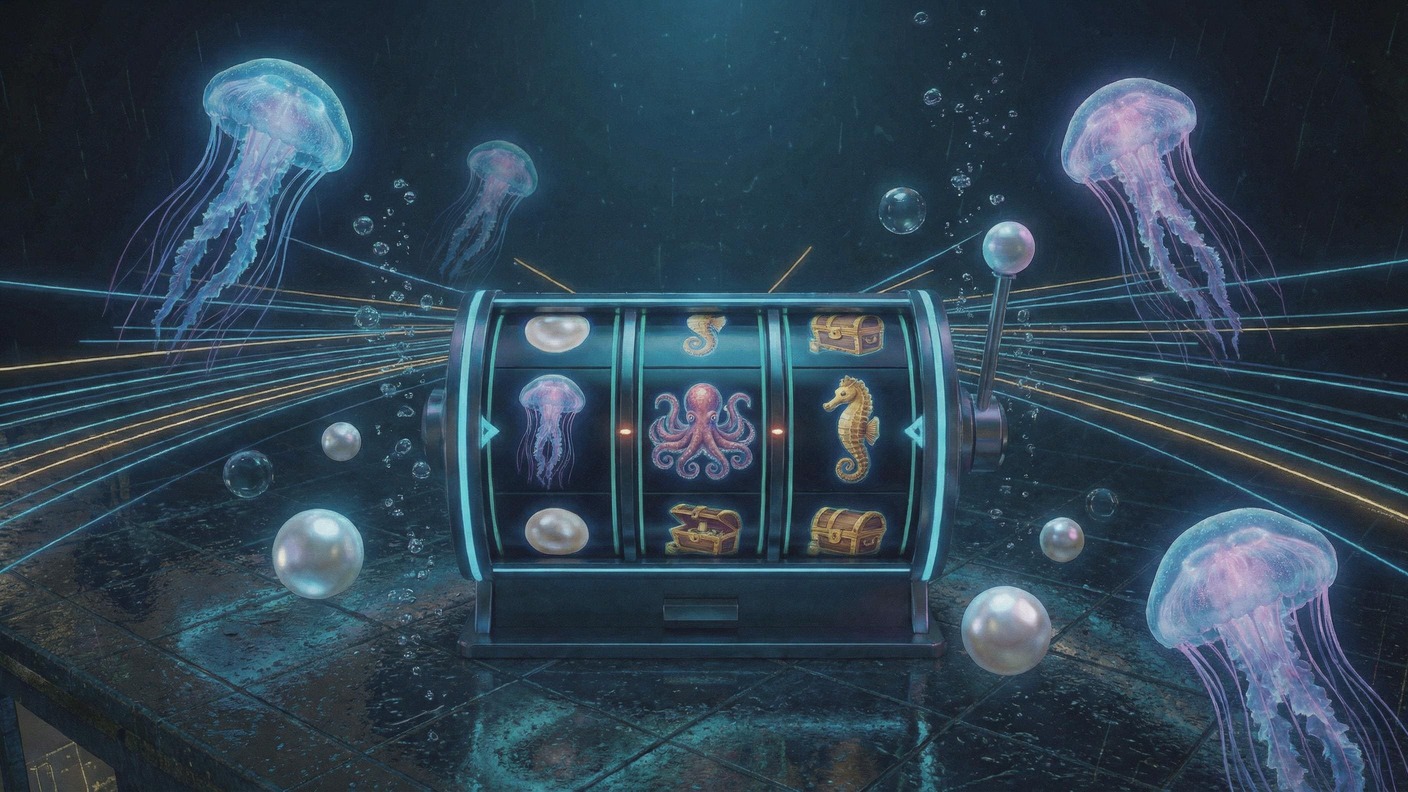
Imagine playing a deep-sea themed game. As you enter a bonus round, the entire Metaverse room around you “submerges.” The floor turns into a vibrant coral reef, and the lighting shifts to a deep, oceanic blue. If the AI detects your excitement levels rising through your wearable’s heart-rate sensor, the marine life becomes more active, and the visual effects become more intense. The game environment is essentially a living organism that evolves with your session. This level of visual reactivity keeps the experience fresh, ensuring that no two sessions ever look identical.
Comparing the Generations: 2D vs. Metaverse Visuals
| Visual Component | 2D Legacy Slots (Pre-2024) | Metaverse Spatial Slots (2026) |
| Geometry | Flat sprites and 2D overlays | Volumetric 3D objects with depth |
| Lighting | “Baked” static lighting | Real-time neural path tracing |
| Perspective | Fixed single-angle view | 6 Degrees of Freedom (6DoF) |
| Player Avatar | None (Username only) | Fully articulated 3D digital twins |
| Interaction | Click and touch | Haptic reach, grab, and gesture |
| Environment | Static background image | Dynamic, generative spatial world |
| Visual Fidelity | Standard 4K/UHD | Dual 8K per-eye VR optimization |
The Role of Haptics and Spatial Audio in Visual Perception
An expert in 2026 design knows that the eyes are only part of the story. Visuals are reinforced by sound and touch. We use “Spatial Audio Synesthesis” to link sounds directly to visual events.
When a massive stone symbol drops onto the virtual reels, you don’t just see the dust cloud; you hear the low-frequency rumble from exactly three feet below your ears, and your haptic gloves provide a sharp “thud” against your palms. This cross-sensory reinforcement makes the visuals feel “heavy.” Without the correct sound and haptic data, the most beautiful VR graphics would still feel like a ghost. By locking these three senses together, we have created a digital reality that feels as solid as the physical world.
Social Visuals: The Community of Avatars
Gambling in the Metaverse is a social spectacle. In 2026, your visual experience includes the presence of dozens of other players. Our “Avatar Fidelity Engine” ensures that every player around you looks like a unique individual, with fluid, AI-driven animations.
Spectacle and Celebration
When a player hits a massive jackpot in our central Metaverse plaza, the visual event is global. The “Virtual Sky” might erupt in a synchronized light show that every player on the floor can see. You can walk over to the winner, give them a haptic high-five, and see the digital sparks of celebration fly between your hands. This shared visual language turns a solitary activity into a communal festival. It replicates the “energy” of a physical floor, something that was entirely missing from the 2D era of online gaming.
Decentralized Assets and Visual Rarity
One of the most unique aspects of the 2026 visual revolution is the integration of NFTs as visual skins. We allow players to “wear” their wins.
If you win a rare, limited-edition “Shadow Skin” from a specific tournament, your avatar and your personal slot interface will permanently adopt that visual style. Other players can see your rare assets as you move through the Metaverse. This adds a layer of “Visual Status” to the game. It’s no longer just about the balance in your wallet; it’s about the unique, verifiable visual artifacts you have collected through your journey in the digital dimension.
Frequently Asked Questions
Do I need a high-end PC to experience Metaverse slots in 2026?
No. While high-end PCs offer the absolute peak of fidelity, most 2026 Metaverse platforms utilize “Cloud-Streaming VR.” The heavy neural rendering is done on our servers, and the 4K video is streamed directly to your standalone headset (like the Quest 4 or Apple Vision Pro 2). As long as you have a stable 5G or Wi-Fi 7 connection, the experience is flawless.
How does the visual system prevent motion sickness?
In 2026, we have mastered “Sub-Millisecond Latency.” Motion sickness in VR was caused by the delay between your head moving and the image updating. Our current neural engines, combined with 120Hz refresh rates and “Asynchronous Space Warp” technology, ensure that the visuals are perfectly synced with your inner ear, making the experience comfortable for 99% of players.
Can I customize how my Metaverse slot looks?
Yes. We offer “Visual Modularity.” You can adjust the “Skin” of the game, the ambient lighting of your private room, and even the “Visual Density” of the effects. If you find the dragon’s fire too bright, you can dial it down in your personal settings without affecting the view of other players.
Is the “Jackpot Light Show” visible to everyone?
That depends on your privacy settings. We have “Public Celebration” modes where a big win triggers a massive visual event for the whole plaza, and “Private Mode” where only you and your invited friends see the high-tier effects.
How do “Volumetric Symbols” work?
Unlike old video slots where symbols were just pictures, volumetric symbols are full 3D models. You can walk around the machine and look “behind” the symbols on the reels. They have physical thickness, and the light from the environment catches their edges realistically.
Can I play in a 2D mode if I don’t have a headset?
Yes, we provide “Pancake Mode” for traditional screens. However, you lose the spatial depth and the haptic interaction. It’s like watching a movie of a theme park versus actually being at the park. The math is the same, but the visual soul of the game is in the Metaverse.
Are there “Visual Clues” in the Metaverse to help me win?
No. While the visuals are stunning, they remain entirely decorative and do not influence the RNG (Random Number Generator). A “vibrant” or “glowing” machine is just a visual state and does not mean the machine is “hot” or more likely to pay out.
How do you handle “Visual Overload”?
Our AI monitors your eye-tracking data. If it detects that your pupils are dilating too much or that your gaze is becoming erratic, it subtly reduces the “particle count” and “bloom intensity” of the graphics to prevent sensory fatigue, ensuring a longer and more comfortable session.
Can I use my own NFT as a background in the slot room?
Absolutely. Our 2026 platform supports “Interoperable Asset Injection.” You can take an NFT artwork from your wallet and “hang” it on the virtual wall of your private gaming suite, or even use it as a texture for the reels of certain compatible games.
What is the most realistic visual feature in 2026?
Most players point to the “Material Shaders.” The way a virtual felt table feels and looks under a digital spotlight, or the way the “glass” on a slot machine shows fingerprints and dust in certain lighting, is so realistic that players often try to touch them with their physical hands.
Conclusion
The visual revolution of Metaverse slots in 2026 has fundamentally changed our relationship with digital wagering. We have moved from a transactional interface to an emotional, spatial journey. By leveraging neural rendering, volumetric physics, and generative environments, we have created a world where the “Magic” of the casino is no longer a metaphor but a visual reality you can reach out and touch. The power of this era lies in its ability to provide a level of beauty and immersion that the physical world simply cannot match. In the Metaverse, we are not bound by the laws of gravity or the cost of physical materials; we are only bound by the limits of our imagination and the processing power of our neural cores.
As we look toward 2027 and the integration of even more advanced technologies like light-field displays and direct neural interfaces, the visual landscape will only become more profound. My commitment is to ensure that while the visuals become more complex, the core of the experience remains focused on the player. We are building a digital cathedral of entertainment, a place where every spin is a cinematic masterpiece and every win is a global celebration of light. The 2026 Metaverse is not just a place to play; it is a place to see the future of human creativity in its most vibrant, high-stakes form. The revolution is here, and it is more beautiful than we ever dared to dream.